GST Calculator India 2026: Slabs, Rates and How to Calculate
Updated April 2026 · 10 min read
Understanding India GST System
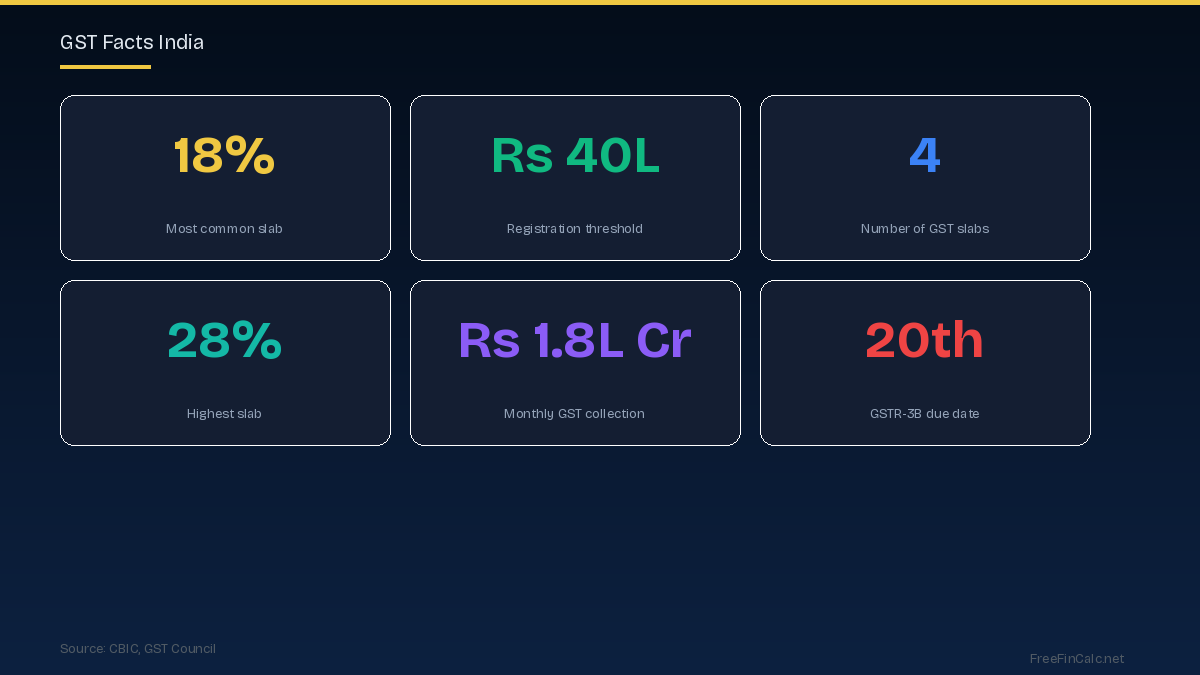
The Goods and Services Tax replaced 17 different taxes when it launched in 2017, creating India single largest tax reform. Monthly GST collections now exceed Rs 1.8 lakh crore, making it the backbone of government revenue. Whether you are a business owner, freelancer, or consumer, understanding GST slabs helps you make better financial decisions. Use our tax calculator (switch to INR) for income tax and GST calculations.
GST Registration and Compliance
Registration is mandatory when turnover exceeds Rs 40 lakh (goods) or Rs 20 lakh (services). For freelancers and consultants, the Rs 20 lakh threshold applies. E-commerce sellers on Amazon and Flipkart must register regardless of turnover. The registration process is online through the GST portal and takes 3 to 7 working days.
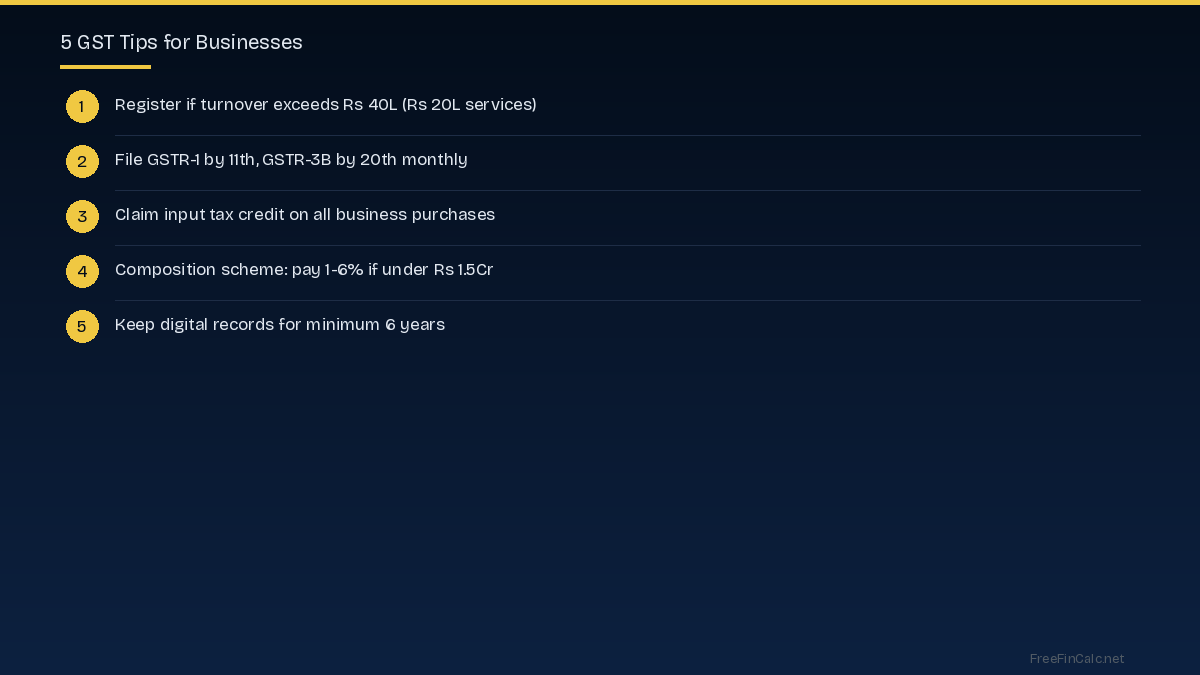
For small businesses under Rs 1.5 crore turnover, the composition scheme simplifies everything: pay 1 percent (manufacturers), 5 percent (restaurants), or 6 percent (services) on total turnover. No input tax credit, but dramatically simpler compliance. Use our budget planner and salary calculator to understand your total tax obligations.
Try These Free Calculators
Frequently Asked Questions
What are the GST slab rates in India 2026?
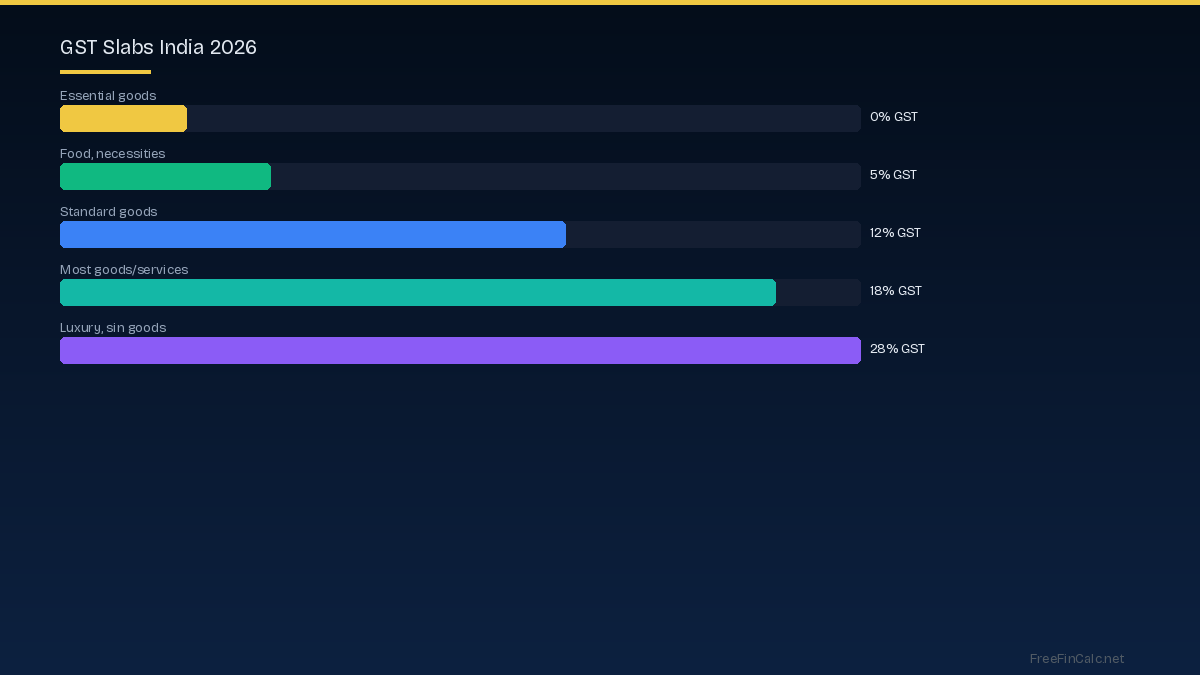
Four main slabs: 5 percent (essential items like food, transport), 12 percent (standard goods like computers, processed food), 18 percent (most goods and services including restaurants, telecom, financial services), and 28 percent (luxury and sin goods like cars, AC, tobacco). Essential items like fresh food and milk are 0 percent.
Who needs to register for GST?
Mandatory if annual turnover exceeds Rs 40 lakh for goods (Rs 20 lakh for services and for special category states). Below this threshold, GST registration is voluntary. E-commerce sellers must register regardless of turnover.
What is input tax credit (ITC)?
ITC allows businesses to claim credit for GST paid on purchases against GST collected on sales. If you collect Rs 18,000 GST on sales and paid Rs 10,000 GST on purchases, you remit only Rs 8,000 to the government. This prevents cascading taxation.
What is the composition scheme?
Small businesses with turnover under Rs 1.5 crore can opt for the composition scheme, paying a flat 1 to 6 percent tax on turnover instead of regular GST rates. Simpler compliance but you cannot collect GST from customers or claim input tax credit.
When are GST returns due?
GSTR-1 (outward supplies): 11th of following month. GSTR-3B (summary return with payment): 20th of following month. Annual return GSTR-9: 31st December. Late filing attracts Rs 50 per day penalty (Rs 20 for nil returns).