Home Inspection Cost 2026: What to Expect and Never Skip
Updated April 2026 · 10 min read
What a Home Inspection Actually Costs in 2026
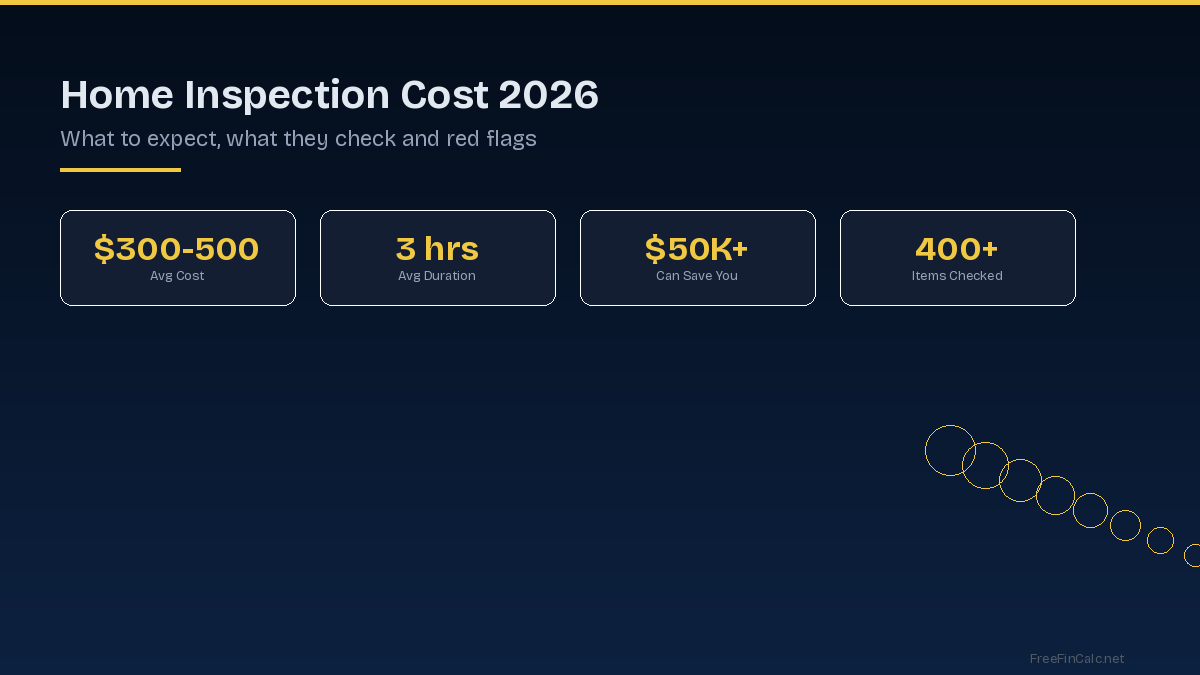
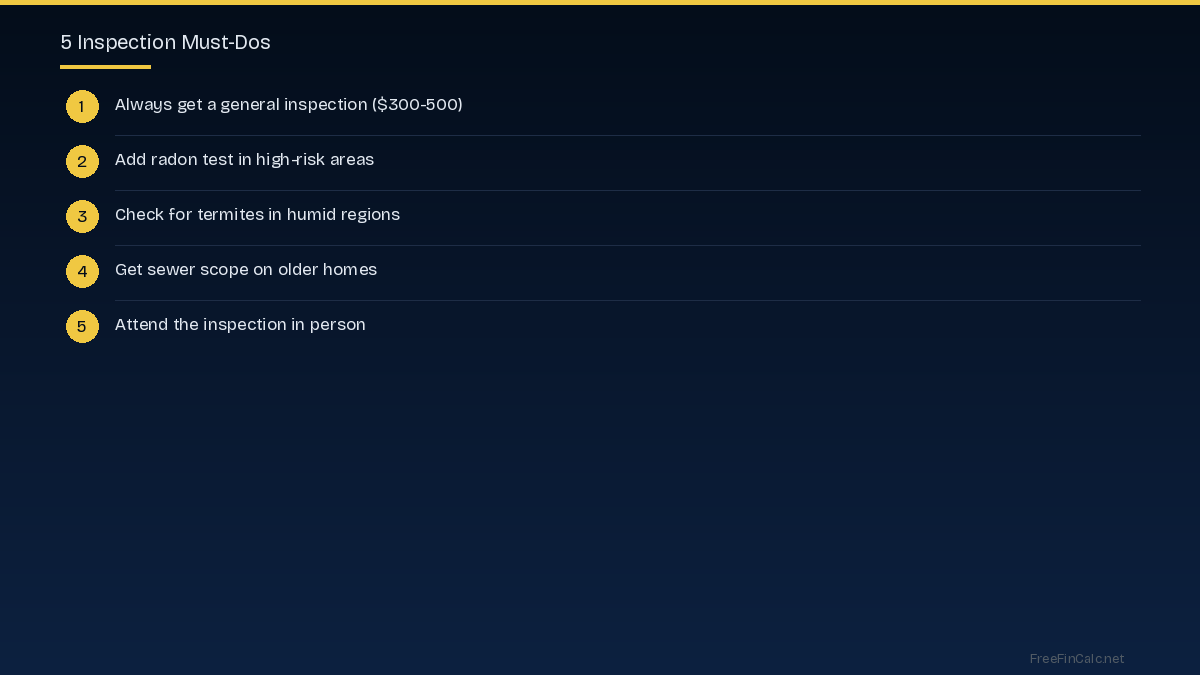
A standard home inspection runs $300 to $500 for a typical single-family home under 2,000 square feet. Larger homes ($400 to $600), condos ($200 to $400), and new construction ($300 to $500). The inspection takes 2 to 3 hours and covers structure, roof, plumbing, electrical, HVAC, exterior, and major systems. Factor this into your closing costs.
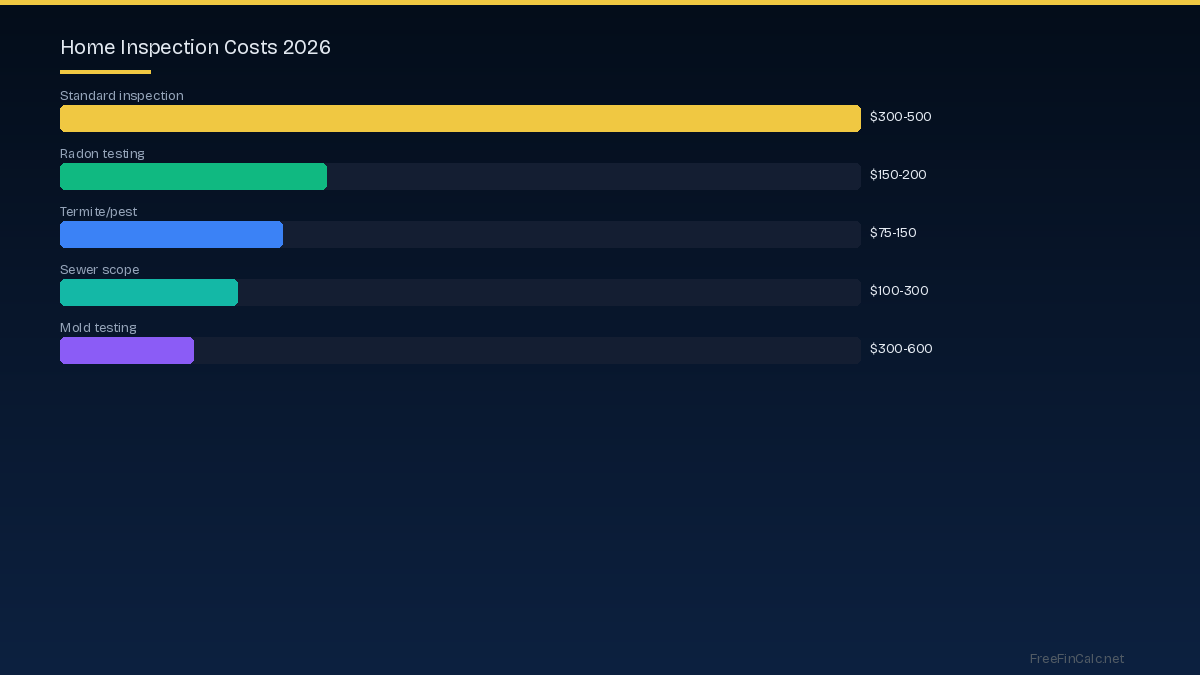
Additional tests that are often worth the cost: radon testing ($150 to $200, essential in high-risk areas), termite inspection ($75 to $150, important in humid southern states), sewer scope ($100 to $300, critical for homes over 20 years old), and mold testing ($300 to $600, if moisture signs are present). Total for a comprehensive inspection with add-ons: $500 to $1,200.
Why You Should Never Skip the Inspection
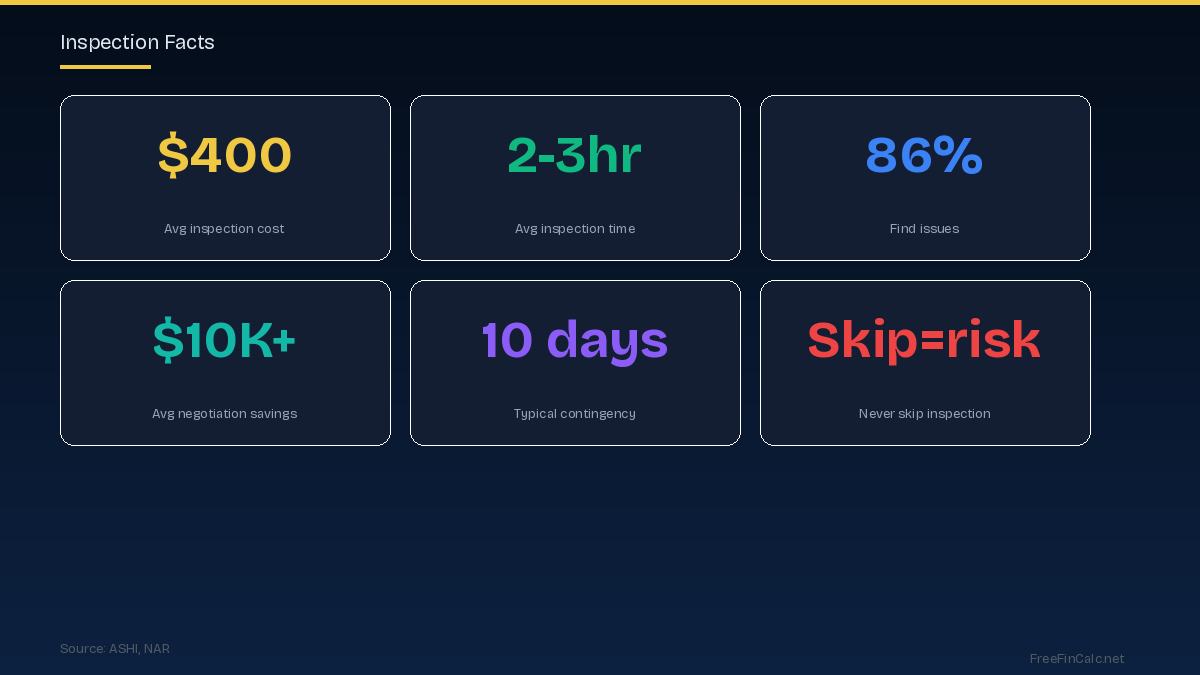
ASHI (American Society of Home Inspectors) reports that 86 percent of inspections find issues. The average finding leads to $10,000 or more in negotiations — price reductions, seller repairs, or closing credits. A $400 inspection that catches a $15,000 roof issue or a $20,000 foundation problem is the highest-ROI spending in the entire home buying process.
Common deal-saving findings: aging roof (replacement $8,000 to $25,000), foundation cracks ($5,000 to $30,000), outdated electrical panel ($2,000 to $5,000), failing HVAC ($5,000 to $12,000), water damage or mold ($3,000 to $20,000), plumbing issues ($1,000 to $10,000). Without an inspection, you discover these after closing when they are entirely your problem.
How to Use Inspection Results in Negotiation
Minor cosmetic issues (paint, small repairs under $1,000): usually not worth negotiating over. They signal good faith if you let them go. Major systems issues ($5,000+): request the seller repair before closing, reduce the purchase price by the repair cost, or provide a closing credit. Safety hazards (electrical, structural, mold): insist on repairs or walk away.
Get contractor estimates for major items before negotiating. A written quote for "$12,000 roof replacement needed within 2 years" is far more persuasive than "the inspector said the roof looks old." Use our home affordability calculator and mortgage calculator to recalculate if the price changes after negotiation.
Try These Free Calculators
Frequently Asked Questions
How much does a home inspection cost in 2026?
A standard home inspection costs $300 to $500 for a typical single-family home. Price increases with square footage: homes over 2,000 sq ft typically cost $400-600. Additional tests (radon, termite, sewer, mold) add $75-600 each.
Is a home inspection worth it?
Absolutely. The average inspection finds $10,000 or more in issues that can be negotiated with the seller. A $400 inspection that reveals a $15,000 roof issue or $8,000 foundation problem is the best investment in the entire home buying process.
What does a home inspection cover?
Structure (foundation, framing), roof condition and remaining life, plumbing (pipes, water heater, fixtures), electrical (panel, wiring, outlets), HVAC (furnace, AC, ductwork), exterior (siding, drainage, grading), insulation, windows, doors, and major appliances.
Can I skip the home inspection to make my offer more competitive?
This is extremely risky. Waiving inspection to win a bidding war can cost you tens of thousands in hidden repairs. At minimum, get an informational inspection even if you waive the contingency. Never buy a home blind.
What should I do if the inspection finds problems?
Minor issues ($500-2,000): usually not worth negotiating. Major issues ($5,000+): ask the seller to repair, reduce the price, or provide a credit at closing. Deal-breakers (foundation, mold, structural): consider walking away if the seller will not address them.