How to Invest Money in Nigeria 2026 — Treasury Bills, Stocks & Apps
Updated April 2026 • Nigeria Finance Guide • 8 min read

Treasury Bills — Safest Investment
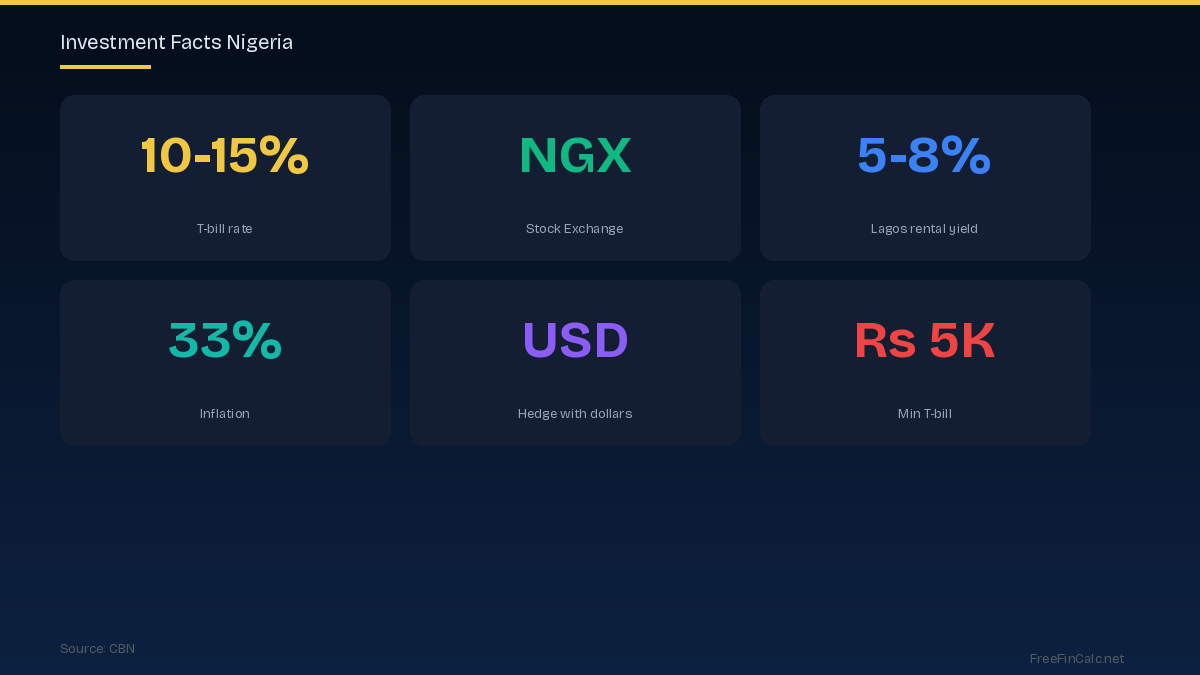
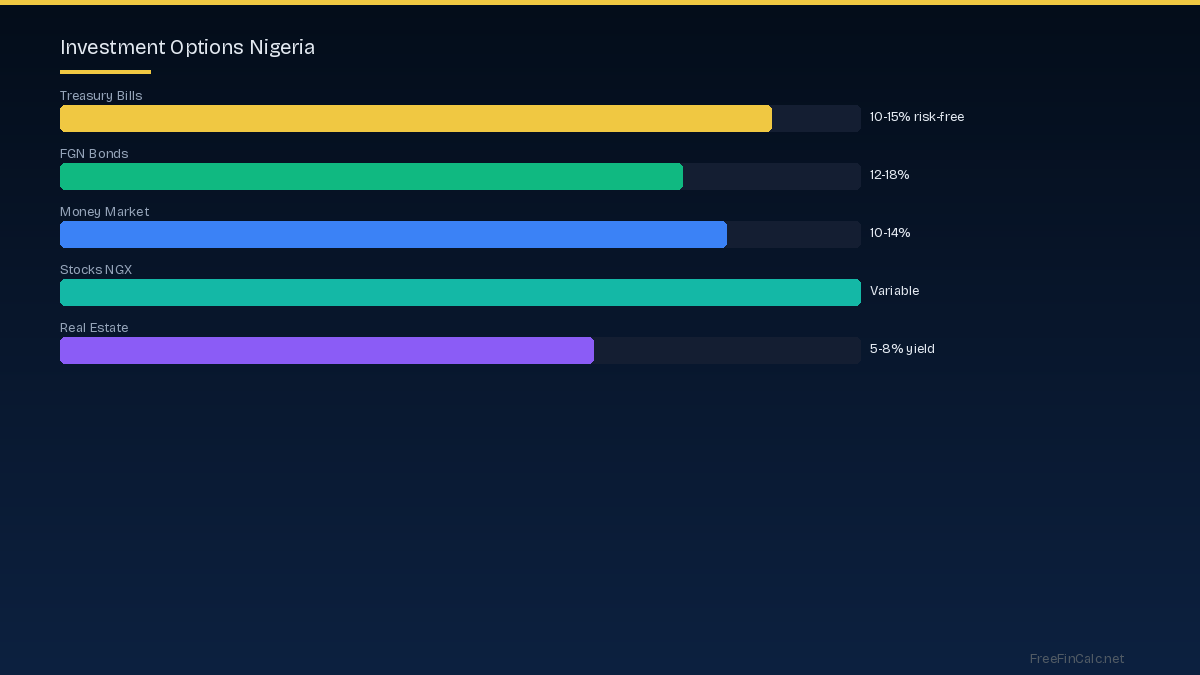
Federal Government Treasury Bills are the gold standard for risk-free investing in Nigeria. Issued by the CBN, T-Bills come in 91, 182, and 364-day maturities with yields of 10-15%. You can invest through commercial banks or apps like Bamboo and Risevest with minimums as low as NGN 1,000.
Interest is paid upfront (discounted), meaning you receive full principal at maturity. For example, investing NGN 1,000,000 in a 364-day T-Bill at 14% means you pay NGN 860,000 and receive NGN 1,000,000 at maturity.
Nigerian Stock Exchange (NGX)
The NGX offers exposure to Nigeria's largest companies across banking, consumer goods, and oil sectors. Blue chips include Dangote Cement, MTN Nigeria, Airtel Africa, and Zenith Bank. Dividend yields on bank stocks often exceed 8-12%. Buy through apps like Bamboo, Chaka, and Trove.
The NGX All-Share Index has delivered approximately 15% average annual returns over the past decade, though individual years vary significantly. For beginners, starting with blue-chip dividend stocks is the safest equity approach.
Real Estate Investment
Lagos and Abuja real estate has historically been one of Nigeria's best wealth builders. Rental yields range from 5-8% with capital appreciation of 10-20% annually in prime areas like Ikoyi, Victoria Island, and Lekki. Land in developing Lagos areas starts around NGN 5-10 million.
For smaller investors, Real Estate Investment Trusts (REITs) listed on the NGX offer exposure from as little as NGN 10,000. UPDC REIT and SFS Real Estate Fund are the most popular options.
Dollar-Denominated Investments
Given persistent naira depreciation, allocating to dollar assets is wise. Risevest, Bamboo, and Chaka allow investing in US stocks, ETFs, and fixed-income products. Even a small S&P 500 allocation provides currency hedge plus strong returns.
Risevest offers managed portfolios from $10, while Bamboo provides access to individual US stocks. The key is consistency — even $20-50 per month in dollar investments compounds significantly over time.
Recommended Portfolio Allocation
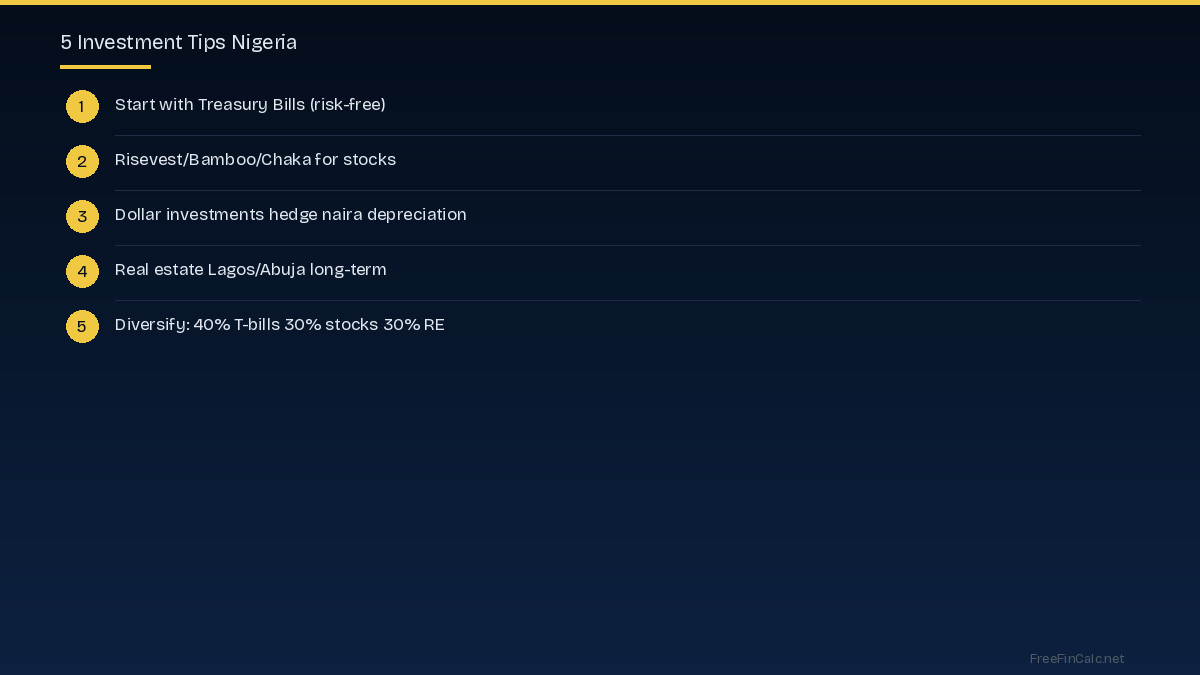
A balanced Nigerian portfolio: 30-40% government securities (T-Bills, bonds) for stability; 20-30% Nigerian equities for growth; 15-20% dollar investments for currency hedge; 10-20% real estate or REITs for long-term wealth. Younger investors can hold more equities, while conservative investors should lean toward fixed income.
Frequently Asked Questions
What is the safest investment in Nigeria?
Treasury Bills offering 10-15% yields are the safest, backed by the Nigerian government. They are virtually risk-free.
How can I invest in US stocks from Nigeria?
Use Bamboo, Chaka, Risevest, or Trove. They allow buying US stocks and ETFs starting from $1-10 using naira.
What is the minimum to start investing in Nigeria?
You can start with NGN 1,000-5,000 through platforms like Cowrywise, PiggyVest, and Risevest. FGN Savings Bonds start at NGN 5,000.
Is real estate a good investment in Nigeria?
Yes, Lagos real estate delivers 10-20% annual appreciation in prime areas with 5-8% rental yields. Entry costs are high though.
How do I beat inflation when investing in Nigeria?
With 30%+ inflation, diversify into equities, real estate, and dollar assets. T-Bills alone at 10-15% do not beat inflation.