Best Savings Accounts in Pakistan 2026 — Profit Rates & NSC
Updated April 2026 • Pakistan Finance Guide • 8 min read
Overview
Pakistan offers some of the highest savings rates in the world due to the elevated policy rate set by the State Bank of Pakistan (SBP). Whether you prefer conventional or Islamic banking, there are excellent options for growing your money.
Key Details
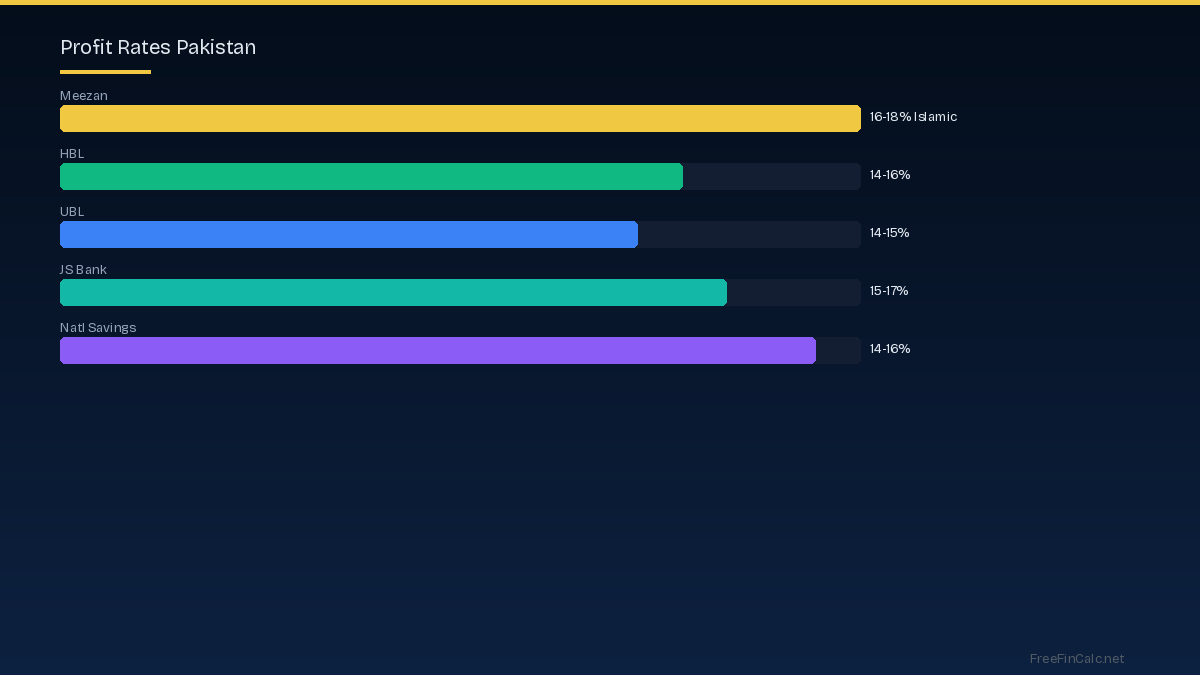
Meezan Bank, Pakistan's largest Islamic bank, offers profit rates of 16-18% on term deposits, making it one of the most competitive options. HBL and UBL offer 14-16% on conventional term deposits. JS Bank has been competitive at 15-17% for longer tenures.
Important Considerations
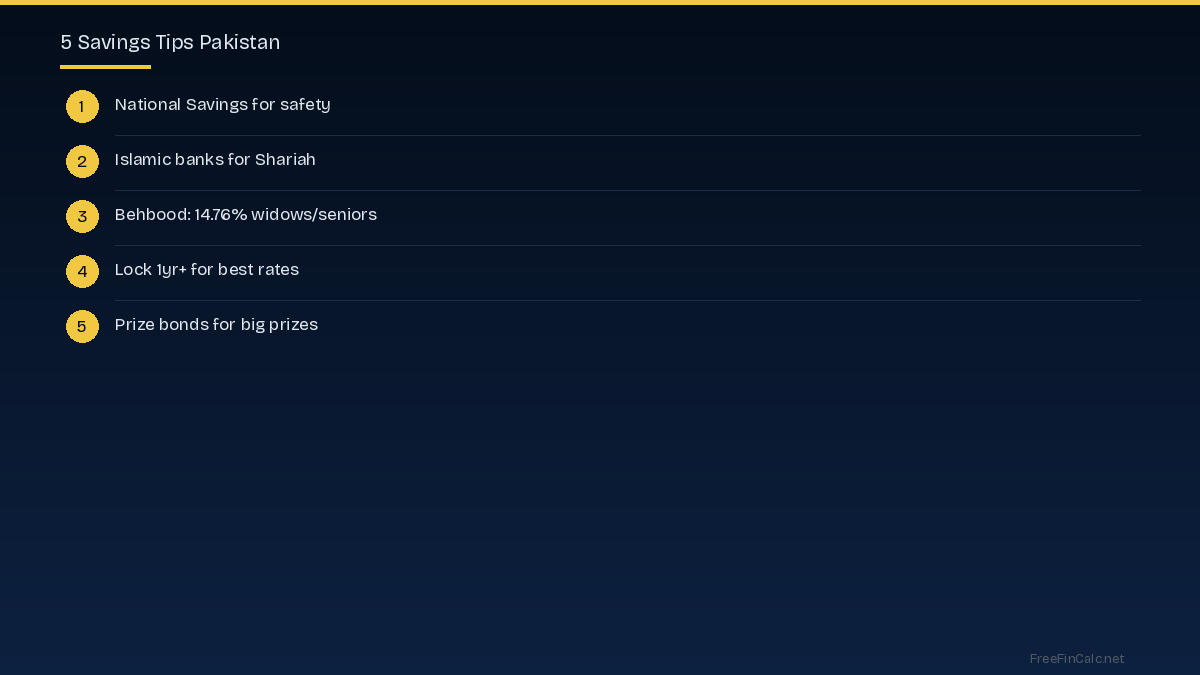
National Savings Certificates remain the safest option in Pakistan. Regular Income Certificates offer 14-16% paid monthly, while Behbood Savings Certificates provide 14.76% exclusively for widows, the elderly, and persons with disabilities. Defence Savings Certificates offer competitive rates with 10-year maturity.
Additional Information
Prize Bonds offer a lottery-style savings instrument unique to Pakistan. The Rs 40,000 denomination prize bond offers substantial prizes (up to Rs 80 million) drawn quarterly. However, the expected return is lower than fixed deposits, making them more of a gamble than a savings tool.
Practical Tips
For the best overall strategy, keep emergency savings in a high-profit savings account, invest medium-term funds in NSC certificates, and consider Islamic term deposits at Meezan or BankIslami for Shariah compliance.
Frequently Asked Questions
What is the best savings rate in Pakistan?
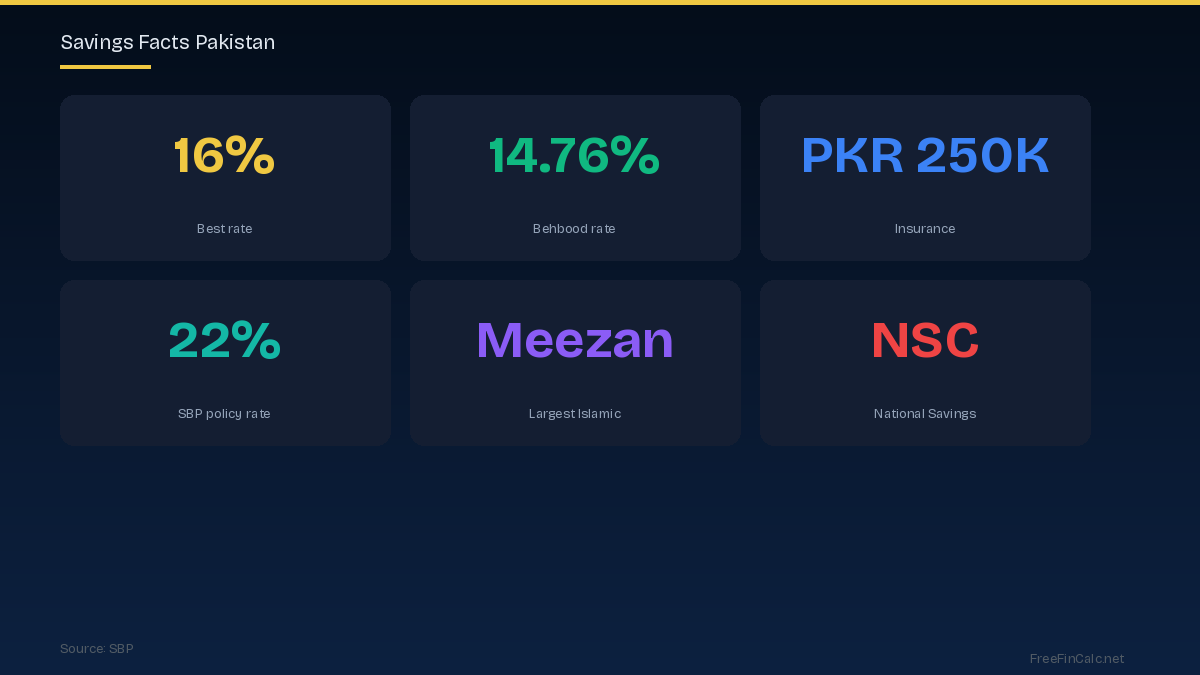
Meezan Bank offers 16-18% on term deposits (Islamic). National Savings certificates offer 14-16%. Behbood certificates pay 14.76% for eligible depositors.
Are savings accounts in Pakistan safe?
Yes, deposits up to PKR 250,000 are insured by the Deposit Protection Corporation. National Savings are government-guaranteed.
What is the SBP policy rate in 2026?
The SBP policy rate is approximately 22% as of 2026, which drives the high savings and deposit rates available in Pakistan.
What are Behbood Savings Certificates?
Government savings certificates paying 14.76% exclusively for widows, persons over 60, and persons with disabilities. No maximum investment limit.
Should I choose Islamic or conventional savings?
Both offer competitive rates. Islamic banking (Meezan, BankIslami) uses profit-sharing models compliant with Shariah law, while conventional banks pay interest.