Cost of Living in Lagos 2026 — Monthly Budget Breakdown
Updated April 2026 • Nigeria Finance Guide • 8 min read
Overview
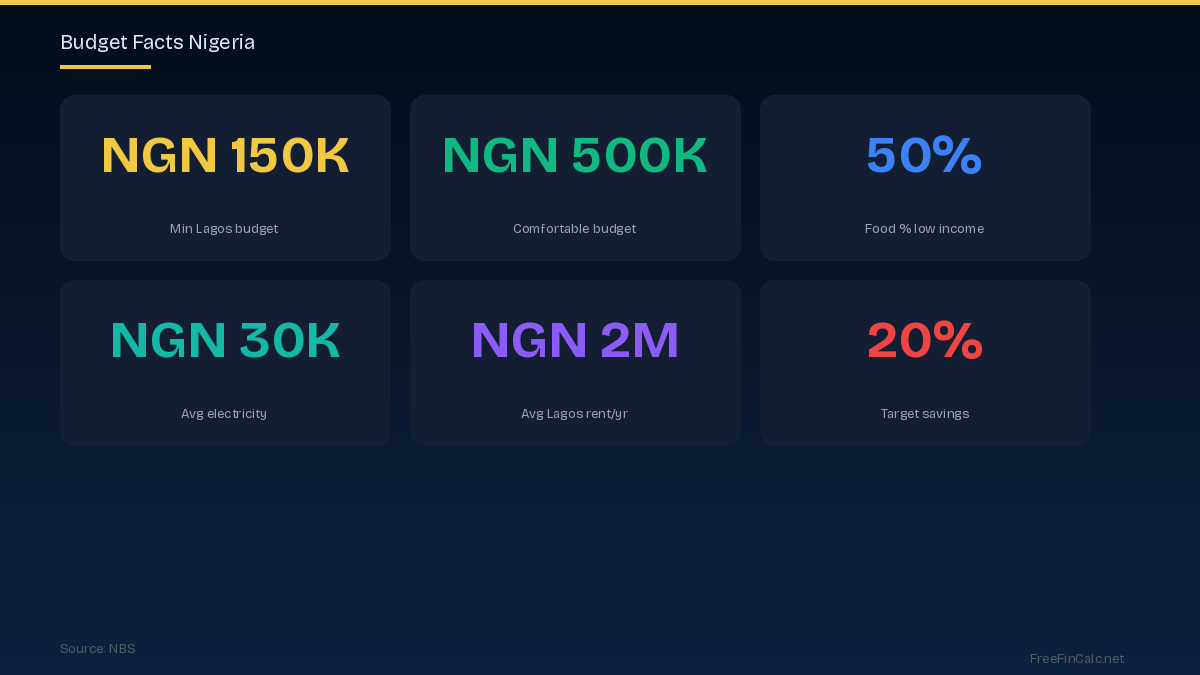
Lagos is Nigeria's most expensive city, but costs vary enormously depending on the area and lifestyle. A comfortable single person needs NGN 300-500K monthly, while a family requires NGN 600K-1.5M or more.
Key Details
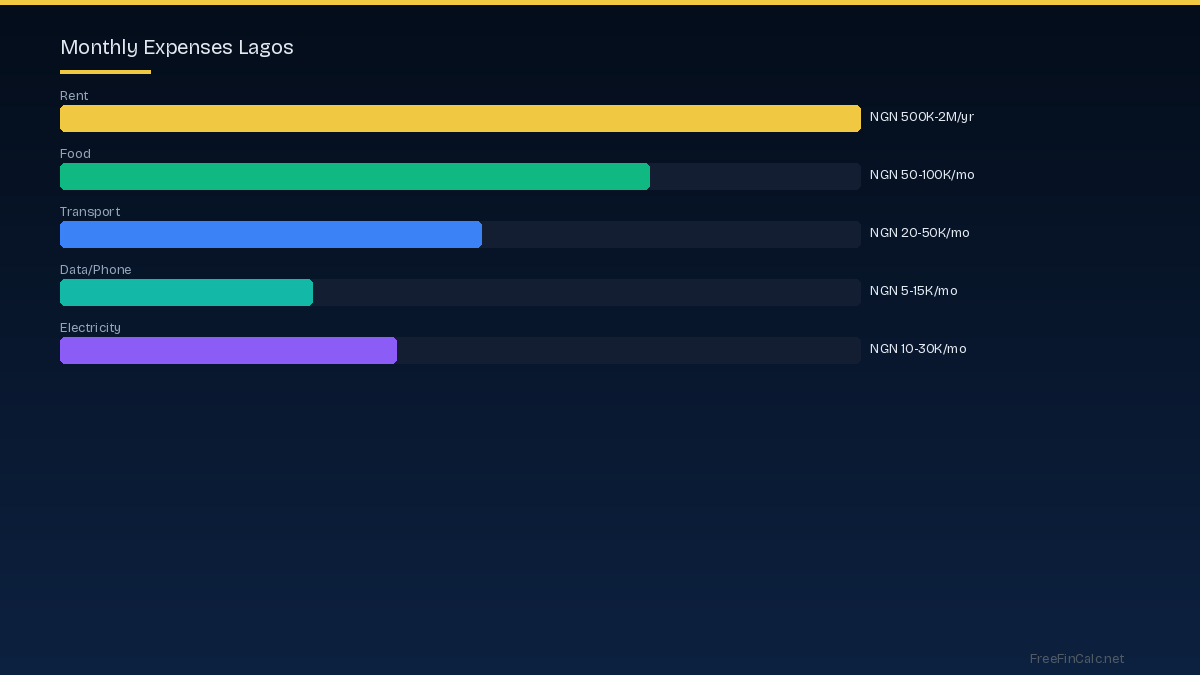
Rent is the biggest expense: A one-bedroom apartment ranges from NGN 300K-800K per year in areas like Yaba, Surulere, and Gbagada. Lekki Phase 1 costs NGN 1-2M, and Victoria Island or Ikoyi commands NGN 2-5M+. Most landlords require 1-2 years rent upfront.
Important Considerations
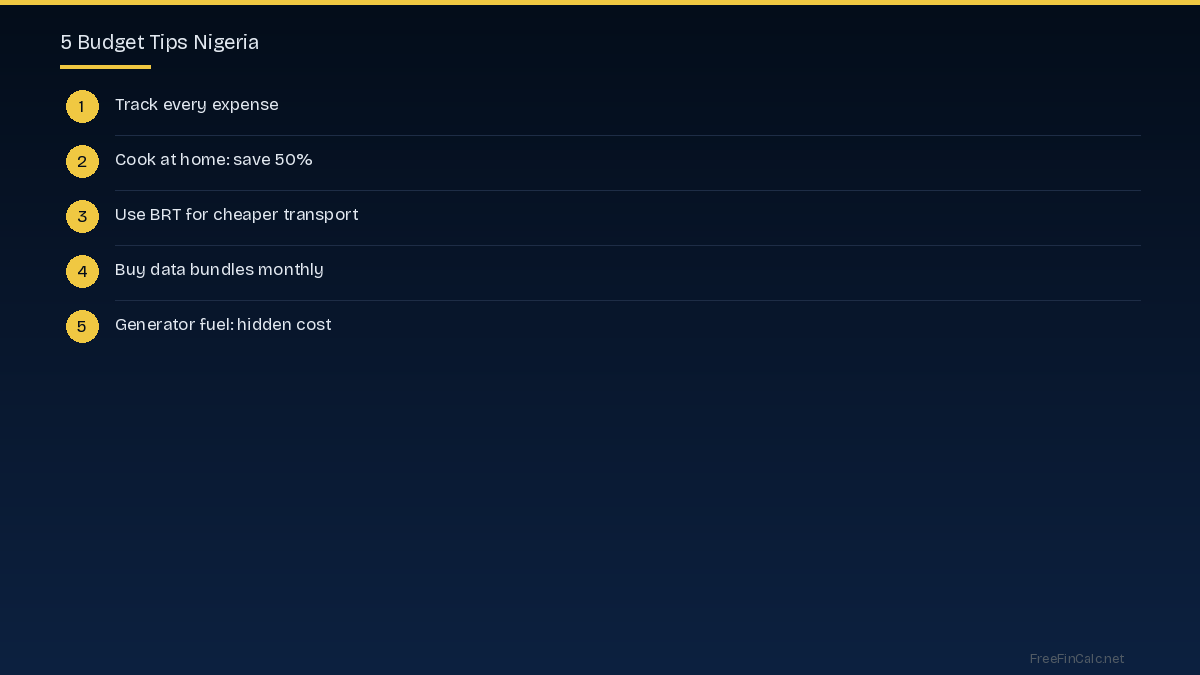
Food costs NGN 50-100K monthly for a single person cooking at home. Eating out adds significantly — a meal at a mid-range restaurant costs NGN 3-8K. Market shopping for staples (rice, beans, garri, palm oil) is much cheaper than supermarket shopping.
Additional Information
Transport ranges from NGN 20-50K monthly. BRT buses are the cheapest option at NGN 200-700 per trip. Ride-hailing (Uber, Bolt) costs more but saves time. Fuel for private vehicles costs NGN 15-30K monthly depending on traffic patterns and generator usage.
Practical Tips
The hidden cost many newcomers miss: generator fuel and diesel. With inconsistent power supply, monthly electricity costs including generator fuel can reach NGN 20-50K or more.
Frequently Asked Questions
How much does it cost to live in Lagos?
A single person needs minimum NGN 150-300K monthly for basic living. Comfortable lifestyle requires NGN 400-600K. Families need NGN 800K-1.5M+.
What is the average rent in Lagos?
One-bedroom in Yaba or Surulere: NGN 300-600K/year. Lekki: NGN 1-2M/year. Victoria Island: NGN 2-5M+/year. Most landlords require 1-2 years upfront.
How much should I budget for food in Lagos?
NGN 50-100K monthly for cooking at home. Add NGN 20-50K if eating out regularly. Market shopping is significantly cheaper than supermarkets.
What is the cheapest area to live in Lagos?
Areas like Ikorodu, Agege, and parts of mainland Lagos offer the lowest rents (NGN 150-300K/year for a room). However, commute times to commercial areas can be 2-3 hours.
How much is transport in Lagos?
BRT buses cost NGN 200-700 per trip. Monthly transport budget ranges from NGN 20-50K depending on distance and mode of transport.