How to Invest in South Africa 2026 — EasyEquities, ETFs & Platforms
Updated April 2026 • South Africa Finance Guide • 8 min read
Overview
South Africa offers a mature investment market with world-class platforms, low-cost ETFs, and excellent regulatory protection through the FSCA. Whether you have R100 or R100,000, there is an investment strategy that works for your situation.
Key Details
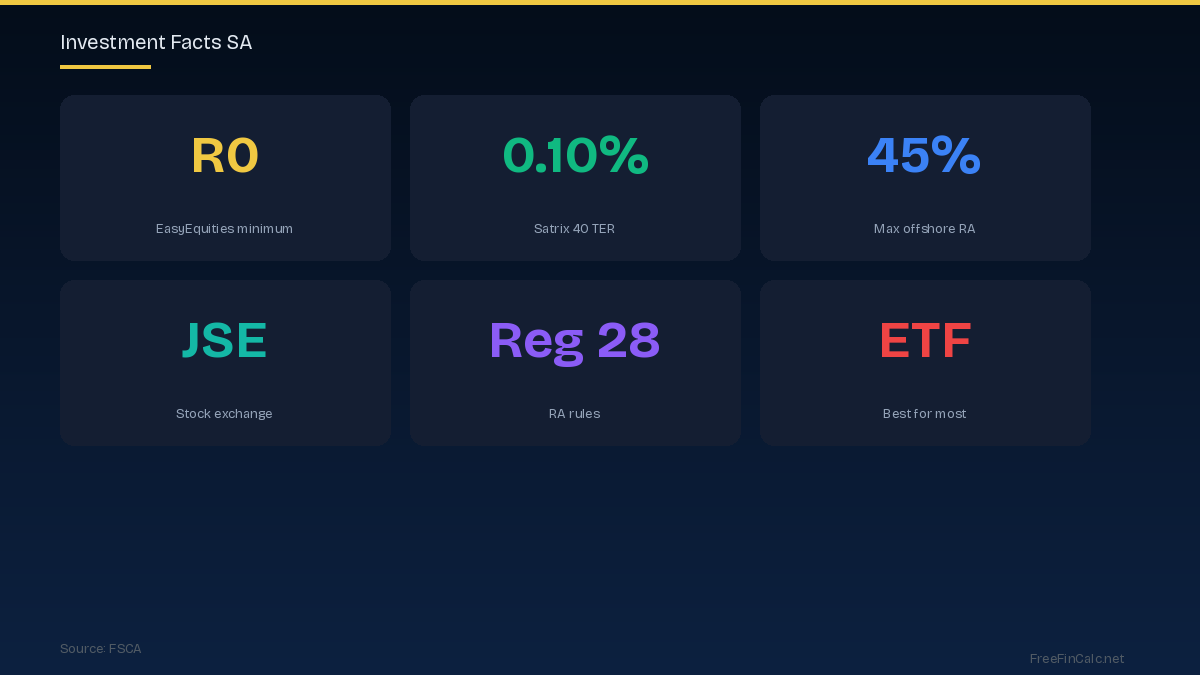
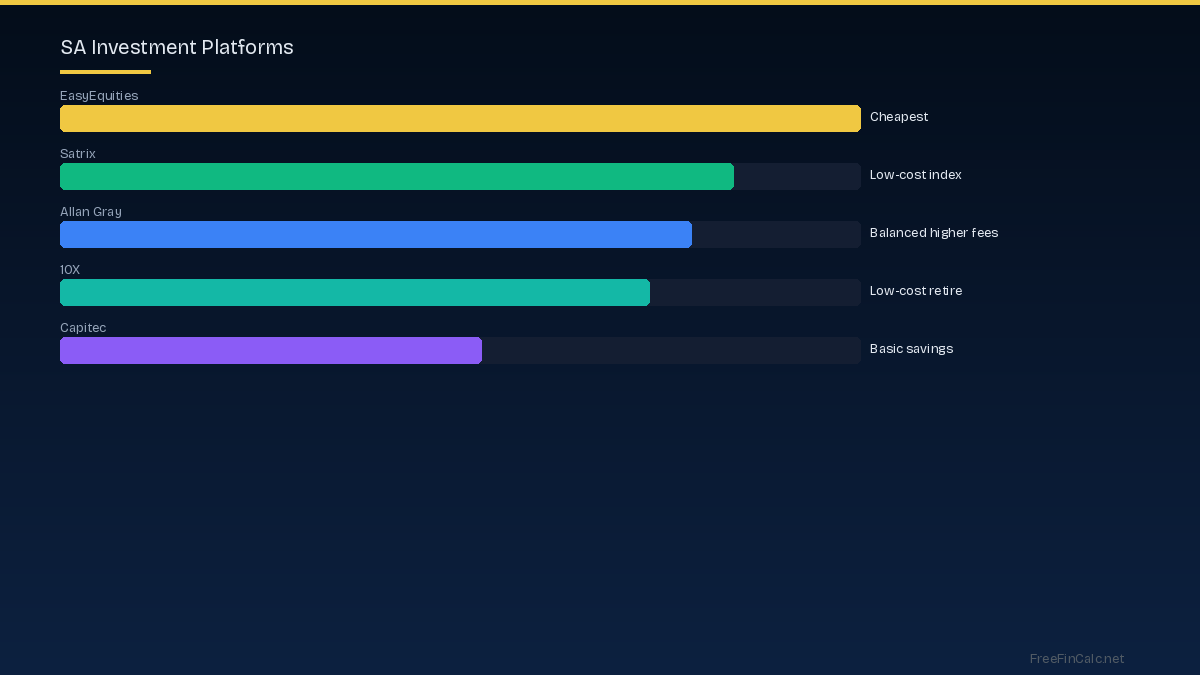
EasyEquities has democratized investing in South Africa with zero minimum investment, fractional share ownership, and the lowest brokerage fees. You can buy SA shares, US stocks, ETFs, unit trusts, and even Krugerrands. The platform has over 2 million users and is ideal for beginners.
Important Considerations
ETFs (Exchange-Traded Funds) are the best investment vehicle for most South Africans. Satrix Top 40 (tracks JSE top 40 companies, TER 0.10%), Satrix S&P 500 (US equity exposure, TER 0.21%), and Sygnia Itrix MSCI World (global exposure, TER 0.31%) are top choices. A simple 60% SA equity / 40% global equity portfolio provides excellent diversification.
Additional Information
For those preferring managed funds, Allan Gray Balanced Fund and Coronation Balanced Plus are long-standing favorites that have delivered strong risk-adjusted returns. They charge higher fees (1-1.5% TER) but offer professional management and asset allocation.
Practical Tips
Offshore investing: South Africans can invest up to R11 million per year offshore (single discretionary allowance of R1M plus R10M foreign investment allowance with tax clearance). For retirement funds, Regulation 28 limits offshore exposure to 45%. Use EasyEquities, Satrix, or Interactive Brokers for offshore access.
Frequently Asked Questions
What is the cheapest investment platform in South Africa?
EasyEquities has the lowest fees with zero minimum investment. You can buy fractional shares from as little as R1.
What is the best ETF in South Africa?
Satrix Top 40 (SA equity, 0.10% TER) and Satrix MSCI World (global, 0.35% TER) are popular choices for diversified equity exposure.
How much can I invest offshore from South Africa?
R1 million single discretionary allowance per year without tax clearance. R10 million foreign investment allowance with SARS tax clearance.
What is Regulation 28?
FSCA regulation limiting retirement fund offshore exposure to 45%. This applies to RAs and pension funds but not discretionary investments.
Should I invest in SA or global markets?
Both. A 50-60% SA and 40-50% global split provides diversification against SA-specific risks like load shedding and political uncertainty.