Solar Power & Load Shedding Solutions South Africa 2026 — Costs & Savings
Updated April 2026 • South Africa Finance Guide • 8 min read
Overview
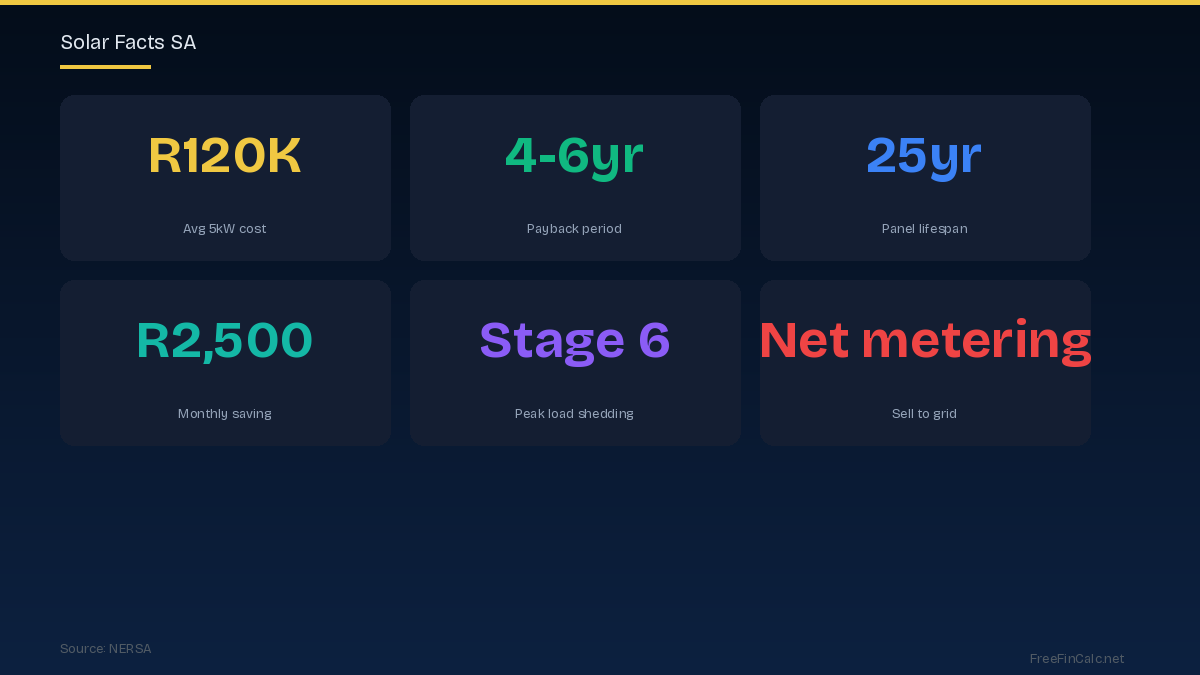
Load shedding has made alternative power essential for South African homes and businesses. Solar systems have become the most popular solution, with payback periods of 4-6 years making them a sound financial investment.
Key Details
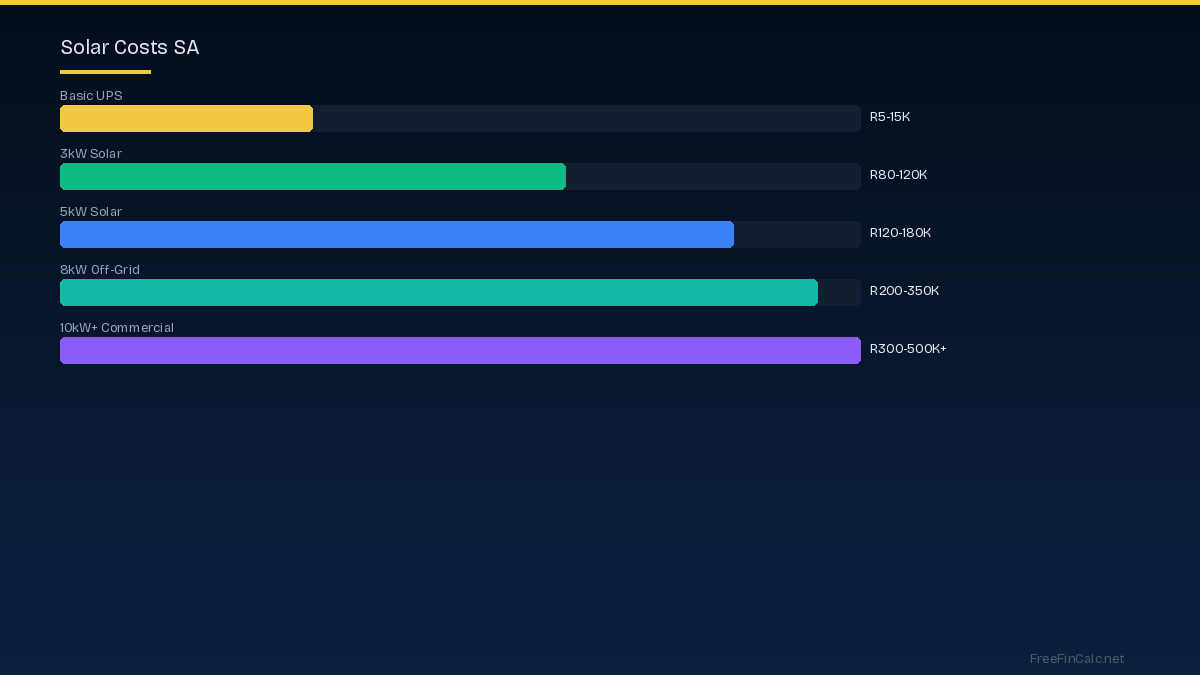
Basic UPS and battery (R5,000-15,000): Powers essentials (lights, Wi-Fi, phone charging) during load shedding for 3-6 hours. Cheapest entry point but limited capacity. Popular brands: Mecer, Gizzu, Ellies.
Important Considerations
3kW solar system with battery (R80,000-120,000): Powers a small to medium home including lights, fridge, TV, and small appliances. Covers most Stage 1-4 load shedding. Battery provides 4-8 hours backup.
Additional Information
5kW solar system with battery (R120,000-180,000): The sweet spot for average South African homes. Powers everything except high-draw appliances (geyser, pool pump, oven). Battery provides 6-10 hours backup. Covers all current load shedding stages.
Practical Tips
8-10kW off-grid system (R200,000-500,000+): Full household including geyser and pool pump. Can go completely off-grid from Eskom. Makes financial sense at current Eskom tariff increases of 15-20% annually.
More Information
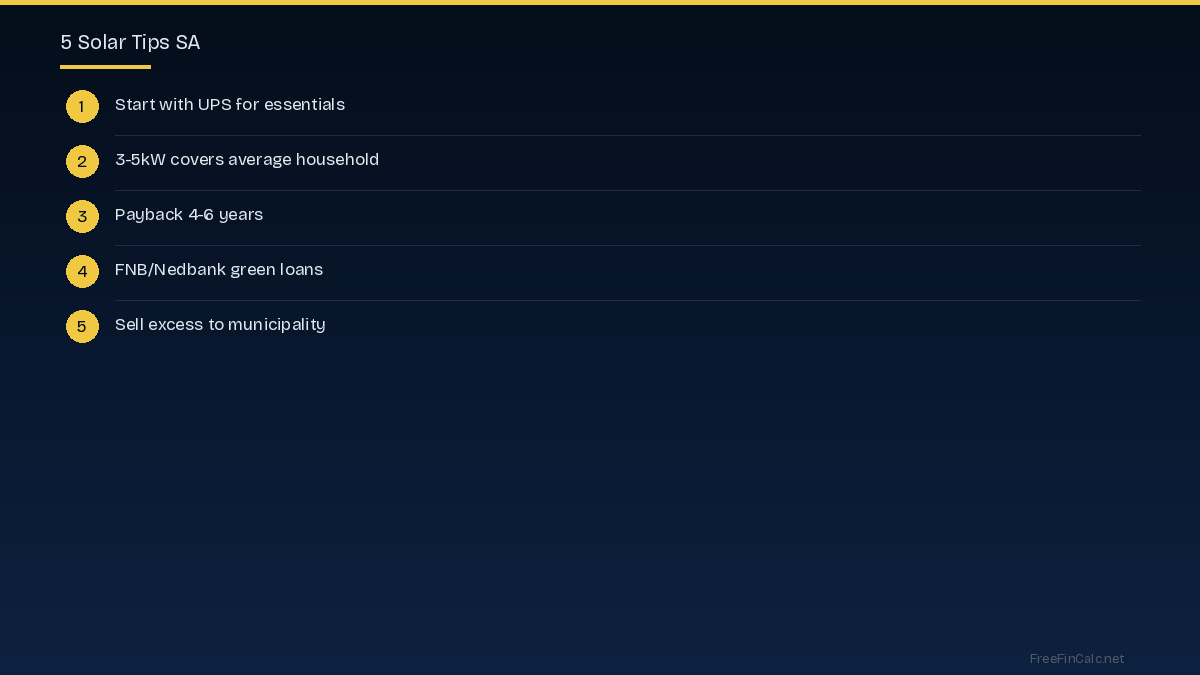
Net metering allows selling excess solar production back to the municipality in some areas (Cape Town, Johannesburg, others). This can further reduce the payback period. FNB and Nedbank offer green home loans specifically for solar installations at competitive rates.
Frequently Asked Questions
How much does solar cost in South Africa?
A 5kW system with battery costs R120-180K. Basic UPS from R5K. Full off-grid 8-10kW from R200-350K.
What is the payback period for solar in SA?
4-6 years at current Eskom rates. With annual Eskom increases of 15-20%, the payback period shortens each year.
Can I sell excess solar power in South Africa?
Yes, net metering is available in several municipalities including Cape Town and Joburg. You receive credit on your electricity bill for power fed back to the grid.
How do I finance a solar system in SA?
FNB and Nedbank offer dedicated green home loans. Some installers offer rent-to-own options. The tax incentive allows 25% deduction for solar panels in the first year.
How long do solar panels last?
Solar panels come with 25-year performance warranties. Batteries typically last 10-15 years. Inverters are warranted for 5-10 years.